

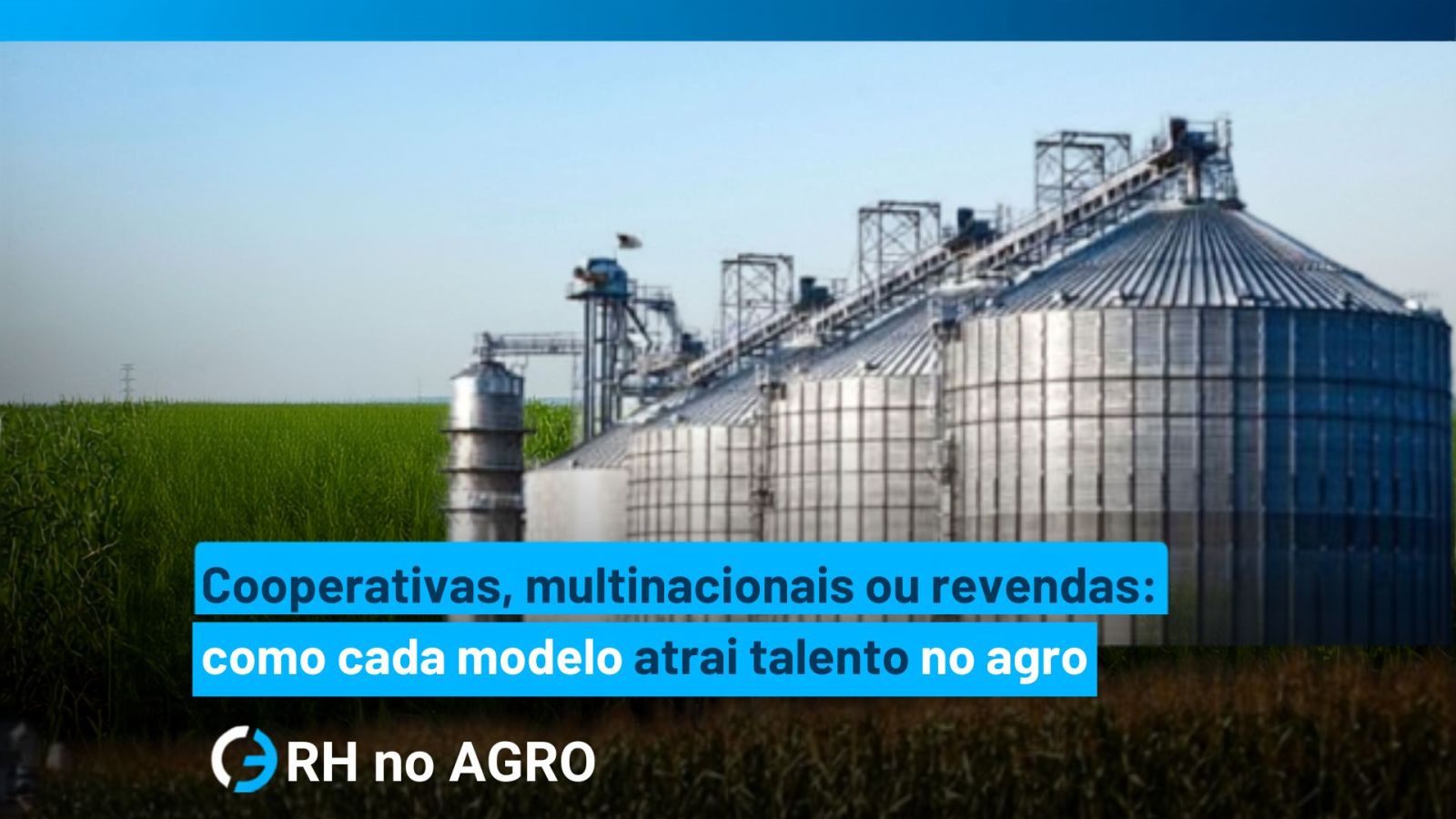
Brazil has 1,172 agricultural cooperatives, made up of around 1.1 million producers and responsible for 268,000 direct jobs, according to data cited by Mundocoop. This branch moved R$ 438.3 billion in 2024 and accounts for more than half of the country's grain and fiber origination, which makes a cooperative career a weighty, real option in Brazilian agribusiness, alongside multinationals and dealers.
Each of these three company models attracts talent differently, and understanding this difference helps both professionals choose where to grow and HR know where to look for the right profile.
Why cooperatives attract talent even without the highest salaries on the market
Organizational culture is pointed to as one of cooperatives' main competitive differentiators in attracting and retaining talent, according to the same Mundocoop report. Unlike a multinational, a cooperative is born close to the producer and with a sense of collective purpose, two assets the job market increasingly values when deciding where to build a career. Add to this the high turnover that marks the sector today, with an average tenure of around three years per professional according to a report by Campo & Negócios, and it becomes clear why retaining talent through culture, not just salary, has become a priority in all three models.
Cooperative, multinational or dealer: what changes for those hiring
The three models compete for the same pool of agribusiness professionals, but they offer very different value propositions, and recognizing this difference avoids both poorly designed positions and hires that do not work out.
Cooperatives: collective purpose and closeness to the productive base
A cooperative professional takes part in a governance structure shared with the member producers themselves, which changes the pace of decision-making and brings the day-to-day role closer to the reality of the fields, even in administrative or headquarters roles. It is an environment that rewards those who value this collective sense and long-term stability.
Multinationals: formal structure and defined career paths
Agribusiness multinationals usually offer clear career paths, both technical and managerial, structured trainee programs and, in many cases, the possibility of expatriation. On the other hand, English is practically mandatory for roles involving contact with the international headquarters or global reporting, and the more hierarchical structure slows down some decisions.
Dealers: commercial agility and closeness to the end customer
Input dealers operate with a leaner structure and faster decisions, and they put professionals in direct, constant contact with the end grower. It is an environment that attracts those who prefer immediate results and close commercial relationships over formal approval processes.
Brazilian cooperatives are born with the asset the market values most today: a strong organizational culture and collective purpose.
How HR decides which model to source each candidate for
The starting point is mapping the behavioral profile the role requires. Candidates who value collective purpose and stability tend to perform better at cooperatives, while profiles more inclined to formal structure and a defined career plan adapt better to multinationals, and those seeking autonomy and a fast pace usually thrive more at dealers. A structured recruitment process, with this reading of cultural fit from screening onward, reduces the risk of hiring the right professional for the wrong company model.
Most common mistakes when hiring across these three models
The first mistake is copying the benefits package and job ad language from one model to another, such as using a multinational's international mobility pitch in a cooperative job ad, which attracts the wrong candidate. The second is ignoring that the sector's high turnover, currently around three years of average tenure, makes communicating organizational culture as relevant in the ad as salary. The third is assessing only technical competence in the interview, without checking whether the candidate really fits that company model's decision-making pace.
Conclusion
There is no superior company model in agribusiness; there is the right model for each profile. Cooperatives, multinationals and dealers compete for the same talent in different ways, and those who understand this difference hire better.
If your cooperative, multinational or dealer needs to structure a hiring process aligned with its culture, Geração C3 can help. We specialize in recruitment and selection exclusively for Brazilian agribusiness.