

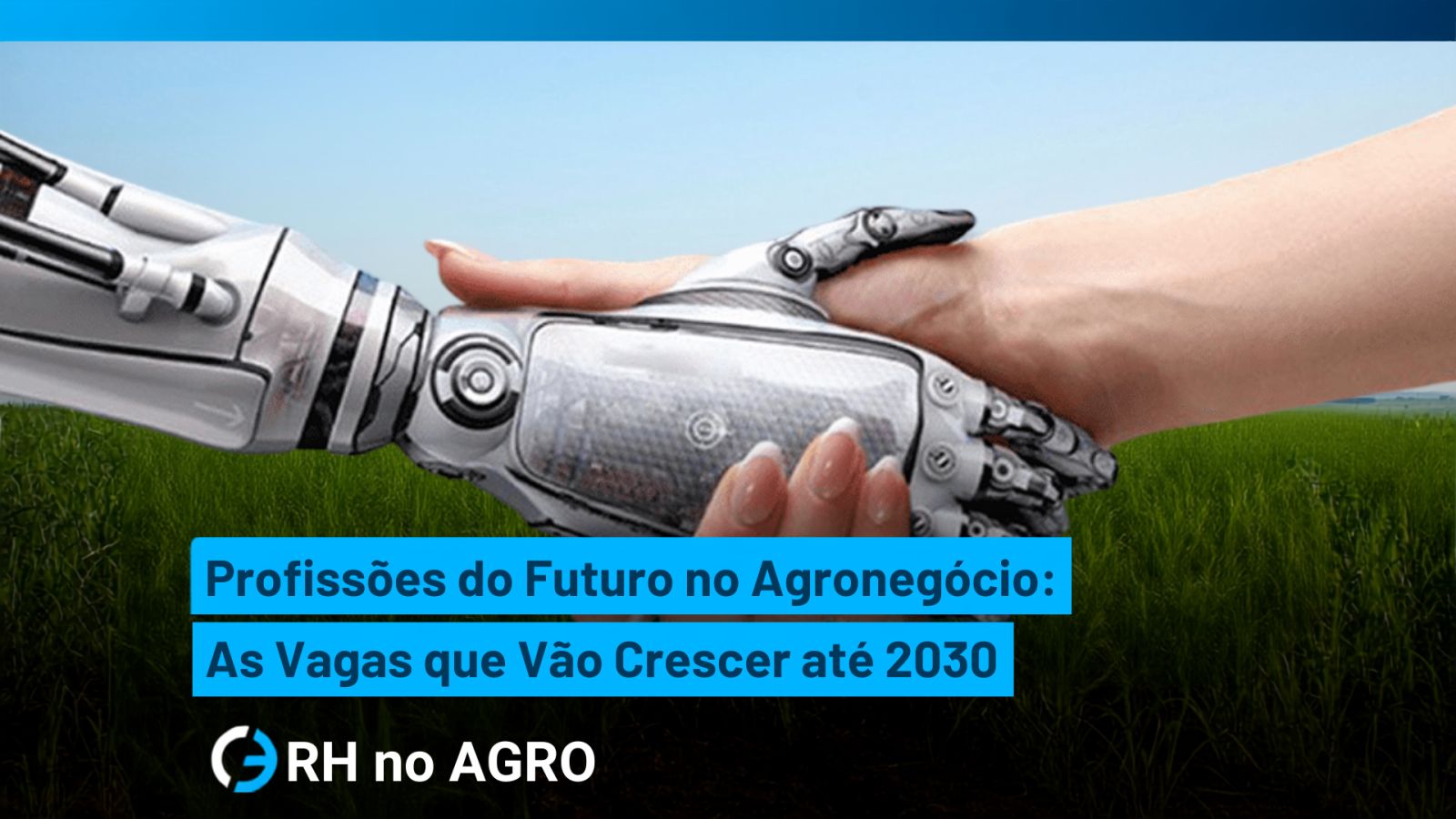
Future jobs in agribusiness no longer fit the traditional image of "field work" that still shapes many people's perception of the sector. Tomorrow's food production depends more and more on data, sensors, algorithms and measurable sustainability criteria, which is creating a new set of roles that barely existed a decade ago, within the same production chain as always.
Companies that map these future jobs in agribusiness ahead of time and start investing in attracting and developing these profiles will reach the next decade with a real competitive advantage. Those that keep thinking about the sector only in terms of traditional roles risk falling behind precisely in the competition for a type of talent that is increasingly scarce and increasingly sought after by other sectors as well.
Why agribusiness is no longer just "field work"
The public image of agribusiness still carries an outdated stereotype, associated only with manual labor and rural life, when the reality of the sector's corporate operations has incorporated cutting-edge technology for years: soil sensors, satellite imagery, harvest forecasting algorithms and digital farm management platforms are part of everyday life at mature companies. This gap between perception and reality drives away precisely the kind of young, technically qualified professional the sector most needs to attract from now on.
Correcting this perception is part of the company's own communication work: showing clearly that working in agribusiness today can mean analyzing sensor data on a screen, not necessarily being in the field all day, helps attract candidates who may never have considered the sector before.
6 rising jobs in agribusiness
Precision agriculture specialist
Analyzes sensor, satellite and weather data to optimize agronomic decisions in real time.
ESG and sustainability specialist
Structures the environmental, social and governance metrics required by markets and lenders.
Agricultural automation engineer
Designs and maintains autonomous equipment and field operation automation systems.
Agribusiness people analytics analyst
Turns HR data into more accurate and strategic people management decisions.
Agricultural biotechnology specialist
Develops applied solutions in genetic improvement and biological pest control.
Digital supply chain manager
Coordinates traceability and shipping efficiency with an integrated digital platform.
What changes in the training required for these roles
These new professions rarely fit entirely within a single traditional degree. A precision agriculture specialist, for example, combines agronomic knowledge with familiarity with data and geoprocessing tools, a combination that is not yet standard in most of the sector's undergraduate programs. This creates a real window of opportunity for professionals willing to complement traditional training with additional technical training in technology.
Companies that invest in developing these skills internally, training those already on staff instead of waiting to find a ready-made candidate on the market, a topic explored in our article on the leadership competencies agribusiness is looking for most in 2026, tend to get ahead while the formal supply of this kind of professional is still taking shape.
Traditional training vs. hybrid training
- Solid in classic agronomic and technical fundamentals
- Less exposure to data, automation and digital tools
- Remains essential for most roles in the sector
- Needs complementing for more technology-driven roles
- Combines sector technical knowledge with digital tools
- Still scarce, which increases the market value of this profile
- Better aligned with emerging data and automation roles
- Can come from internal training, not only from a new degree
How companies prepare to hire these profiles before the competition
Mapping ahead of time which of these skills the operation will need in the coming years, instead of reacting only when the need is already urgent, gives the company time to prepare more calmly: either by training internally or by adjusting its value proposition to attract outside candidates with this more technical and digital profile. Companies that only notice the need when a competitor is already using technology they have not yet mastered arrive late in a race that keeps growing. Anticipating future jobs in agribusiness, instead of reacting to them, is what separates those who lead this transition from those who only follow it from a distance.
Most common mistakes when ignoring this transition
Continuing to advertise jobs with an outdated image of the sector: it drives away precisely the young, technically qualified candidates agribusiness needs most.
Expecting to find a ready-made candidate on the market: hybrid training is still scarce, requiring internal investment in training.
Not reviewing the value proposition to candidates: more technical profiles compare the agribusiness offer with that of other sectors also competing for them.
Postponing the mapping of future needs: reacting only when demand is already urgent reduces the company's room to prepare.
Research from SHRM projects significant growth in occupations linked to data, sustainability and automation in virtually all productive sectors through the end of the decade, a trend that is already strongly visible within the agribusiness production chain as well.
A study by the FAO (Food and Agriculture Organization of the United Nations) for Latin America reinforces that technology adoption in the field is no longer a distant trend but a growing reality in virtually every producing region in the world, which sustains demand for these new professional profiles in the medium term.
Conclusion
Future jobs in agribusiness combine the sector's traditional technical knowledge with digital, data and sustainability skills that are still taking shape in the job market. Companies that map this transition ahead of time, invest in internal training and adjust how they communicate their openings are better prepared to attract this kind of talent before competitors notice the same need.
If your company needs to prepare to hire the agribusiness profiles of the future, Geração C3 can help. We specialize in recruitment and selection exclusively for Brazilian and Latin American agribusiness.