

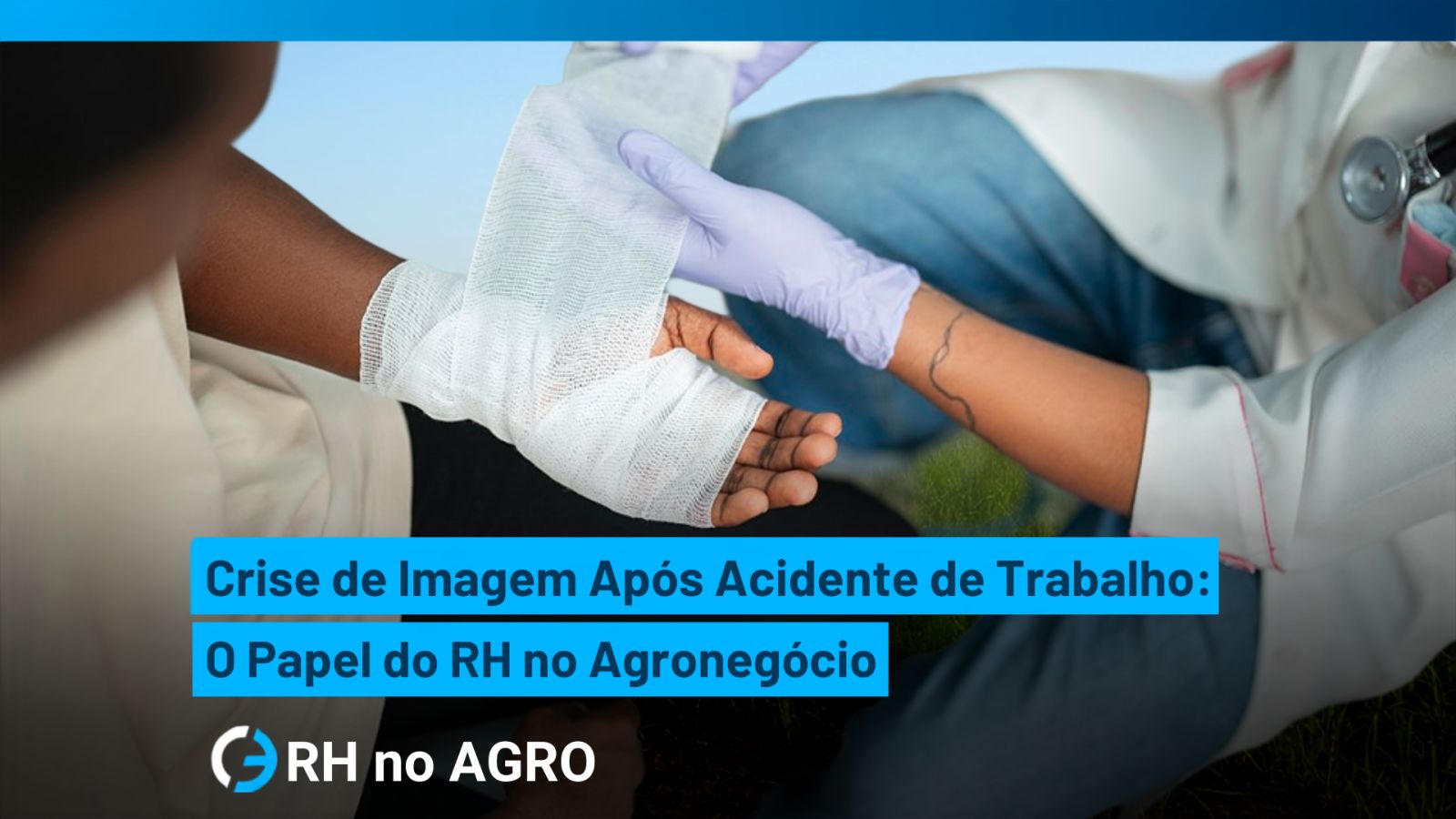
A reputation crisis after a workplace accident is one of the most delicate moments an agribusiness company can face, because it combines real human pain, unavoidable public exposure and the need for quick decisions under pressure, in a context where any misstep can worsen both the internal situation and the company's external reputation.
Many companies only think about a crisis communication protocol after the first serious incident has already happened, when it is too late to act with the composure that prior preparation allows. The result is usually an improvised response that rarely serves the affected family, the internal team or public perception of the case well.
Why HR plays a central role, not a supporting one, at this moment
It is common to think of a reputation crisis after a workplace accident as solely a matter for corporate communications or legal, but HR has information and responsibility that no other area holds in the same way: a direct relationship with the affected employee's family, knowledge of the mood of the team that witnessed or was close to the incident, and access to factual data essential for any external communication the company decides to make.
Excluding HR from the decision table at this moment, leaving the response only to legal and corporate communications, tends to produce a response that is technically correct but humanly disconnected from the reality of those who actually live the impact of the incident inside the company.
The protocol that needs to exist before any incident
Waiting for the incident to happen before deciding who speaks, what is communicated and within what timeframe is a recipe for a disorganized response. Prepared companies already have clear roles defined before any crisis: who the authorized spokesperson is, what the approval chain for statements is, and how site leadership should act in the first hours, even before any guidance from headquarters.
This protocol also connects directly to the legal exposure a poorly handled workplace accident can create, a topic explored in our article on labor liabilities in agribusiness, since a disorganized response or inconsistent communication usually worsens both the reputational and legal risk of the case.
4 phases of responding to a crisis after a workplace accident
Immediate response
Support for the family, care for the team and fact-finding in the first hours.
Transparent communication
Internal and external statements with real information, within the timeframe set in the protocol.
Fixing the root cause
Concrete, visible corrective action, not just a formal statement of commitment.
Rebuilding trust
Ongoing monitoring of team morale in the following weeks and months.
Why prolonged silence usually makes the crisis worse
Faced with uncertainty about what to say, many companies choose silence, hoping the issue will "blow over" without further exposure. In practice, this information vacuum is usually filled by speculation, rumor and third-party narratives, almost always more damaging to the company's reputation than factual information, however difficult, communicated transparently within a reasonable timeframe.
This does not mean communicating sensitive details prematurely or without care for the privacy of the family involved, but rather publicly acknowledging what happened, showing that the company is investigating and acting, and updating that communication as new, confirmed facts become available.
Most common mistakes when responding to this type of crisis
Improvising without a prior protocol: it produces a disorganized response that is inconsistent across different spokespeople.
Staying completely silent: it leaves room for speculation and rumor to fill the information vacuum.
Making promises without actually fixing anything: a statement of commitment without concrete action quickly loses credibility.
Leaving HR out of the decision: it loses the human perspective essential for a balanced response.
How to rebuild the team's trust after the episode
The crisis does not end when external communication dies down. Internally, the team that witnessed the incident or works near where it happened carries the emotional impact for much longer than public attention lasts, and needs to see concrete action, not just words, to trust the safety of the workplace again.
Structured monitoring of team morale in the following weeks, with real space for the team to express concerns without fear of retaliation, is as essential a part of the crisis response as the more visible external communication, but it usually receives much less attention from senior leadership once public exposure of the case fades.
What research on crisis communication teaches
Studies published by Harvard Business Review on crisis communication reinforce that the speed and honesty of the first response weigh more on final public perception than the severity of the incident itself. Companies that acknowledge what happened quickly, even before all the details have been established, tend to preserve more credibility than companies that wait for the perfect answer before saying anything.
This principle applies directly to agribusiness, a sector where the physical distance between sites and corporate headquarters can naturally delay the flow of information, making it even more important to have a predefined protocol that does not depend on improvised decisions in the heat of the moment.
Response differences between an incident at a remote site and at headquarters
An accident at a remote operating site faces challenges that an incident at administrative headquarters does not: less local professional communications support, regional journalists or press with a more direct relationship with the community around the site, and the travel time for senior leadership to reach the location if the severity requires the physical presence of the company's management.
This scenario reinforces the need to prepare site leadership for the first hours of any crisis, since they will be on site long before any specialized support from headquarters can physically arrive, and their first decisions shape much of the initial perception of the case, both internally and externally.
The role of preparing site leadership in advance
Training site managers for the first hours of a serious incident, before any event happens, is one of the lowest-cost, highest-return investments in crisis preparation. This training should cover the practical basics: who to call immediately, what to communicate and what not to communicate without authorization, how to support colleagues present at the time of the incident, and how to preserve factual information without compromising the subsequent investigation.
Managers unprepared for this type of situation tend to react in two problematic ways: complete paralysis for fear of saying something wrong, or impulsive communication without enough information, both harmful to the organized response the company needs in the critical first hours after a serious event.
This kind of preparation connects to a broader development of leadership competencies, a topic explored in our article on leadership competencies in agribusiness, since a manager well prepared for a crisis is usually the same manager able to lead the team confidently in any high-pressure situation, not only in an isolated serious incident.
The International Labour Organization reinforces that companies with a mature safety culture treat the response to a serious incident as a natural extension of prevention, not as an isolated event handled only by the legal department, which also favors a faster, better-coordinated crisis response when a case actually happens.
How to balance transparency with respect for the family's privacy
One of the biggest practical challenges is communicating transparently enough to satisfy legitimate public interest without exposing details that cause additional harm to the affected employee's family, who are already facing the worst possible moment. Names, images and specific medical details rarely need to be made public by the company, even when there is outside pressure for more information.
A company that consults the family, whenever possible, about what can be communicated publicly shows genuine respect and also reduces the risk of the family feeling exposed or used by the very corporate communication that should protect them at this moment.
This care requires that whoever is leading the communication has human sensitivity, not just public relations technique, to navigate the fine line between being accountable to society and preserving the dignity of those already suffering from the loss or injury.
Acknowledge quickly
Confirm the facts publicly early on, even before all details are established.
Protect the family
Consult them before releasing names, images or sensitive medical details.
A single spokesperson
Avoid conflicting versions coming from different sources within the company.
Update with new facts
Revise communication as confirmed information comes in.
Companies that have been through this kind of situation report that the way they treated the family in the first days, much more than the exact content of the public statement, was what most influenced how the case was remembered internally by the team in the years that followed. Accounts like this reinforce that investing in genuine human care, even if hard to measure with traditional HR metrics, produces a real and lasting return in organizational trust, an asset no communication campaign can quickly rebuild once it is lost.
Conclusion
A reputation crisis after a workplace accident sharply tests whether the company really has a people management structure prepared for moments of real pressure, not just for calm day-to-day operations. A protocol defined in advance, HR present in the decision, transparent communication and visible correction of the root cause are what set apart a company that comes through this moment with its credibility intact from one that emerges with lasting reputational damage.
If your company needs to structure people management and communication for critical moments, Geração C3 can help. We specialize in recruitment and selection exclusively for Brazilian and Latin American agribusiness.